Whether you prefer a desert oasis, Japanese-inspired gardens, or enormous flower sculptures, the U.S. has hundreds of botanical gardens — each one unique, inspiring, and worth a visit.
As part of our ongoing series featuring the countless unique and worthwhile destinations in the U.S. — including national parks and art museum exhibitions — we now turn to the most serene and spectacular botanical gardens the country has to offer.
Each of these eight gardens is open year-round, and they typically offer seasonal displays that make return visits worth your time and consideration. A heavy rotation of events, such as Longwood Gardens’ Festival of Fountains throughout the summer or Portland Japanese Garden’s Night of a Thousand Cranes, make these gardens enticing to visitors of all ages.
Other than Longwood Gardens and the Portland Japanese Garden, all the destinations listed below are part of the American Horticultural Society’s Garden Network. If you are a member of the Garden Network, you may receive free entry and additional discounts to these gardens and nearly 400 others across North America.
Longwood Gardens
Kennett Square, PA
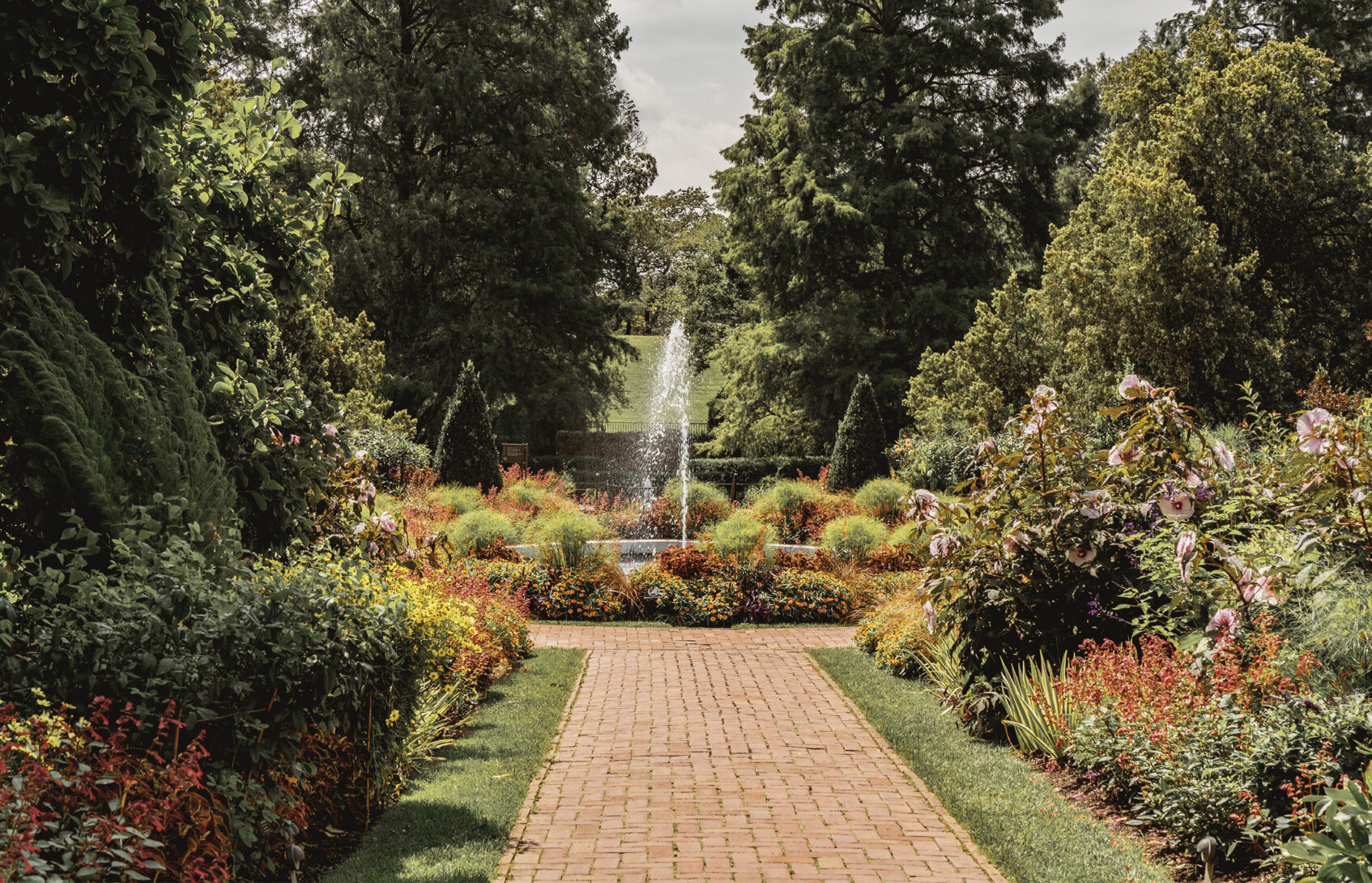
Consistently ranking among the nation’s greatest botanical gardens, Longwood is truly a spectacle to behold. Its sprawling gardens, woodlands, and meadows cover 1,100 acres, making it larger than Central Park in Manhattan. Visitors flock to Longwood Gardens to see native and exotic plants, horticulture (both indoor and outdoor), seasonal and themed attractions, events, and performances, as well as educational lectures, courses, and workshops.
The Fountain Garden, a highly popular section of Longwood, features European-inspired architecture, with 1,700+ jets propelling water 175 feet into the air. For comparison, the world-famous Fountains of Bellagio in Las Vegas only require 1,200 jets to create their choreographed water shows. Another prominent feature of Longwood is its Conservatory District, which was built in 1919. One of the largest of its kind in the world, the conservatory is big enough to hold 20 distinct gardens of its own, including tropical, Bonsai, and arid varieties.
Did you know? If you’re feeling adventurous and wish to explore more of the greater Philadelphia area, consider visiting Bartram’s Garden. Founded in 1728 by botanist John Bartram, it is North America’s oldest surviving botanical garden and is home to the oldest ginkgo tree on the continent.
Missouri Botanical Garden
St. Louis, MO
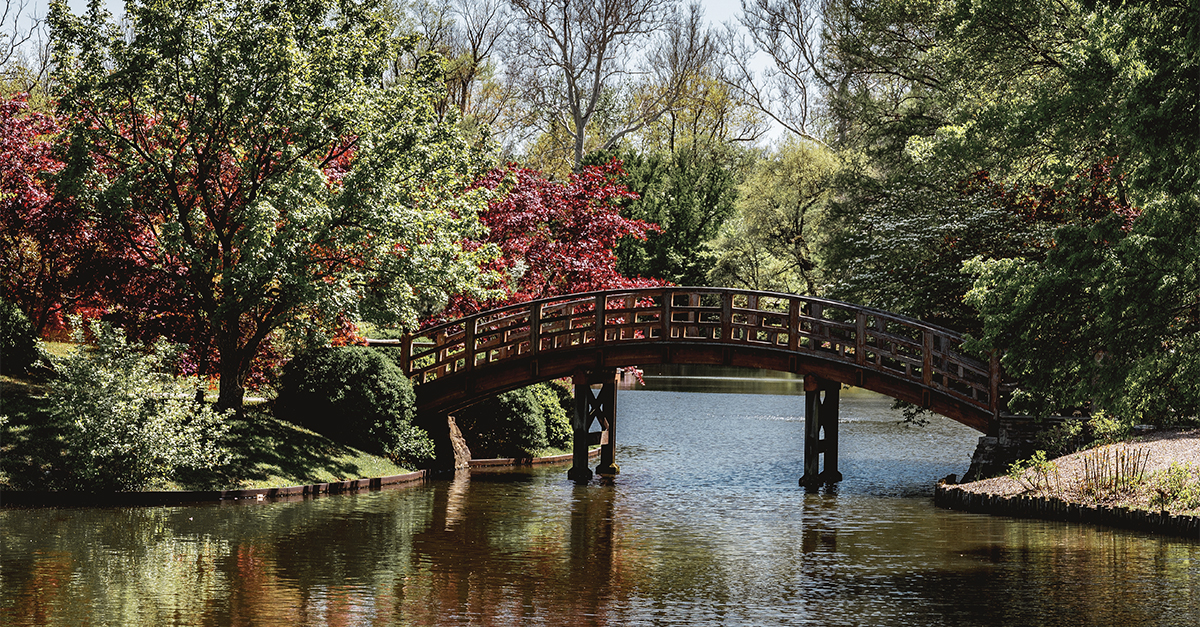
British immigrant Henry Shaw created this garden, which opened in 1859. Now spanning nearly 80 acres, the park includes many features that are one-of-a-kind. First and foremost is the garden’s Climatron Conservatory, a geodesic greenhouse modeled after the designs of architect Buckminster Fuller. It was the world’s first completely air-conditioned greenhouse, and because it simulates the climate of a rainforest, the Climatron is able to house exotic plants, numerous butterflies, and waterfalls.
MoBot, as it’s referred to by locals, also prominently features Seiwa-en, a Japanese strolling garden. At 14 acres in size, it is the largest of its kind in North America. Additionally, the garden’s herbarium contains more than 7.5 million specimens, making it the second largest on the continent. One of the prominent features of the park is the Linnean House, built in 1882. It is the oldest continuously operated public greenhouse west of the Mississippi River and is known for its extensive camellia collection.
Did you know? The garden borders Tower Grove Park, a nearly 300-acre urban green space featuring a weekly farmers’ market, 32 pavilions, a lily pond, and approximately 400 species of trees, bushes, and flowering plants.
Desert Botanical Garden
Phoenix, AZ
 While you may think the words “desert” and “garden” wouldn’t necessarily form an agreeable pair, the opposite could not be further from the truth in Phoenix. Imagine more than 50,000 plants, including nearly 14,000 cacti, spreading across a garden almost as large as Disneyland.
Along with its spread of plant life — one-third of which is native to the area, including 400 species considered rare, threatened, or endangered — Desert Botanical Garden also welcomes visitors to walk along the Desert Discovery Loop Trail. This is the garden’s main feature and is lined with iconic Saguaro, barrel, and hedgehog cacti varieties. Along with rotating art exhibitions, some of which feature the work of legendary blown-glass sculptor Dale Chihuly, the garden invites you to visit its Butterfly Pavilion. Throughout the spring season, visitors can walk among thousands of live butterflies native to the Southwest.
Did you know? Saguaro are the largest cacti species in the United States and can grow to be over 40 feet tall. Though they grow slowly, specimens routinely live to be anywhere from 150 to 200 years old.
United States Botanic Garden
Washington, D.C.
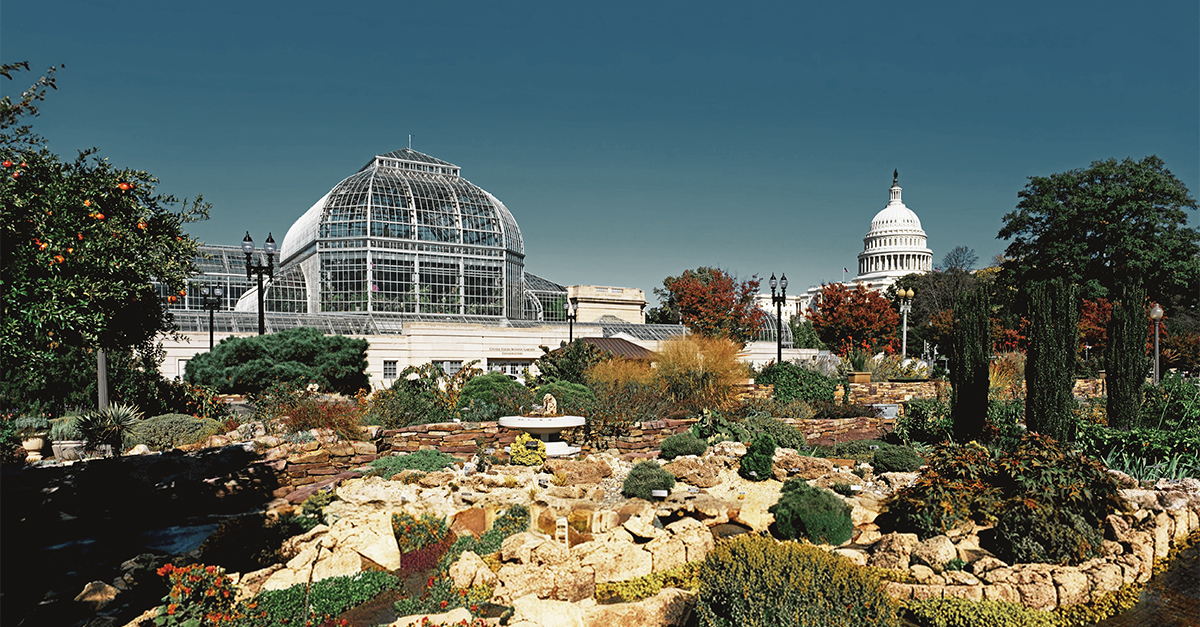
Located in the eastern portion of the National Mall, this garden proudly serves as the oldest continually operating botanic garden in the U.S. Featuring a historic conservatory with many diverse habitats, the United States Botanic Garden also houses the outdoor National Garden and the small and scenic Bartholdi Park. Among the permanent exhibits in the massive, historic greenhouse — capped off by a 93-foot tropical dome — are 10 distinct garden rooms and two courtyards, offering environments from arid deserts to lush jungles.
If you plan to visit this garden in the future, one of its primary selling points is its location. Contained inside the Mall and within walking distance of the garden are a number of historical museums and war memorials, the Hirshhorn Sculpture Garden, the Washington Monument, the Lincoln Memorial and adjacent Reflecting Pool, and many others.
Did you know? Though it may seem antithetical to planning a trip here, visitors of all ages flock to the U.S. Botanic Garden to see — and smell — amorphophallus titanium, or the corpse flower. This plant’s bloom, which can grow up to nine feet tall, only lasts for a few days and releases a famously stinky stench for all nearby nostrils and, more importantly, pollinators.
Portland Japanese Garden
Portland, OR
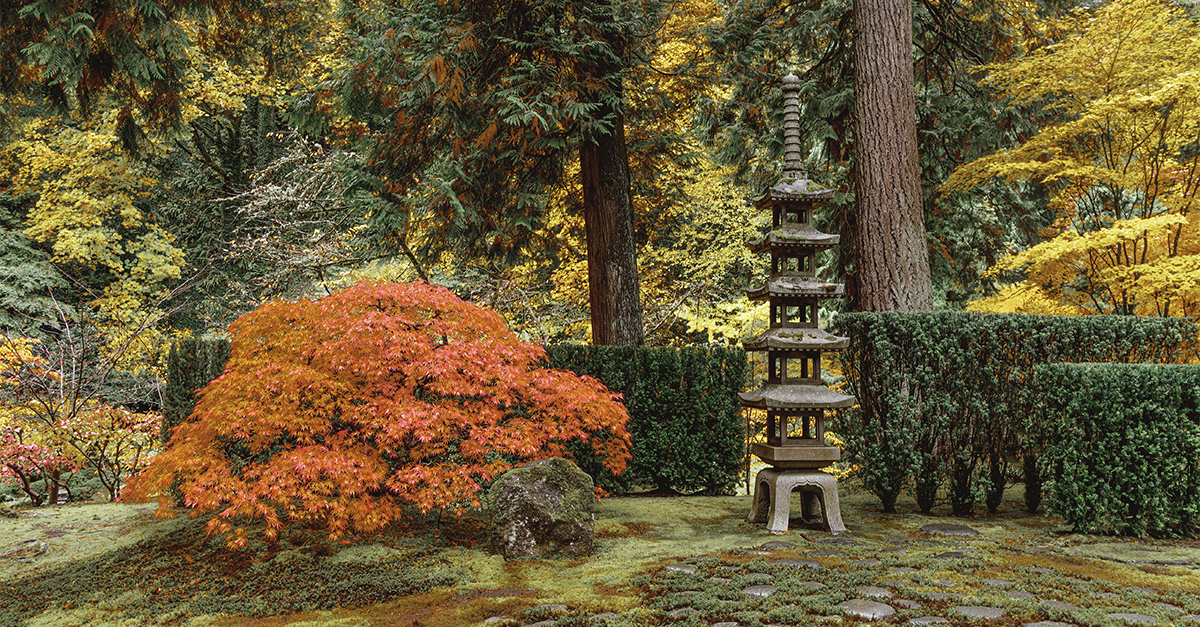 An extensive strolling pond garden with a handcrafted moon bridge, a 200-year-old temple gate, a serene sand and stone Zen garden, and breathtaking views of Mount Hood. These are among the many stunning scenes you can take in at the Portland Japanese Garden, located in Washington Park. And as you can imagine, the influence of Japanese culture is abundant throughout.
The aforementioned pond garden, or Tsukiyama, consists of upper and lower ponds connected by a stream, featuring big, beautiful koi fish. Another popular spot among visitors is the tea garden, or roji, leading to an authentic tea house built in Japan and then reassembled in Portland. It features a rustic atmosphere designed for the traditional tea ceremony. There is also the Flat Garden, known as Hiraniwa, a minimalist space utilizing sand, moss, trees, and intricately arranged stones, all of which harmonize to create a tranquil landscape representing happiness and enlightenment.
Did you know? If, by the time you leave this garden, you feel you haven’t yet had your fill, simply head across the street to the International Rose Test Garden. A marvel in its own right, it plays host to more than 10,000 rose bushes of approximately 650 varieties. This may explain why Portland is nicknamed the “City of Roses.”
Chicago Botanic Garden
Glencoe, IL
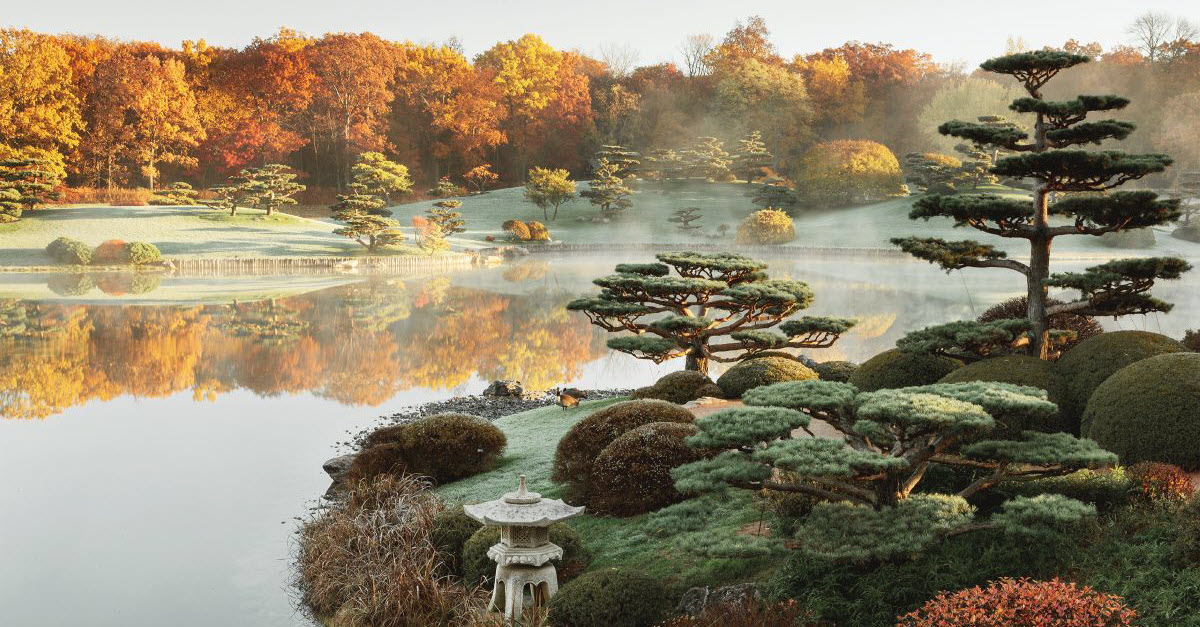
You’d have a hard time finding a more family-friendly destination in Chicago than this. From the Natural Play Garden — featuring a willow tunnel, climbing boulders, and a man-made stream running through most of the garden — to the Kleinman Family Cove serving as an aquatic learning area, the Windy City’s 385-acre garden is perfect for visitors of all ages. There’s also the Model Railroad Garden, which houses a popular miniature train attraction, and the Regenstein Learning Campus, a state-of-the-art facility for education.
For older visitors who are seeking the more traditional exhibits here, you’ll be pleased to know there are 27 distinct gardens, four natural areas, and a massive lake system. Furthermore, the Elizabeth Hubert Malott Japanese Garden is well known for its traditional design, including islands, bridges, and scenic views that focus nature and age. The rose garden is especially popular during summer months, when thousands of roses are in bloom.
Did you know? Goose Island and Northerly Island are not the only isles of note in Chicago. Its botanic garden is also built on not one but nine man-made islands, boasting six miles of shoreline. The garden was created by transforming over 300 acres of lowland marsh into a scenic landscape of islands and lakes.
New York Botanical Garden
Bronx, NY
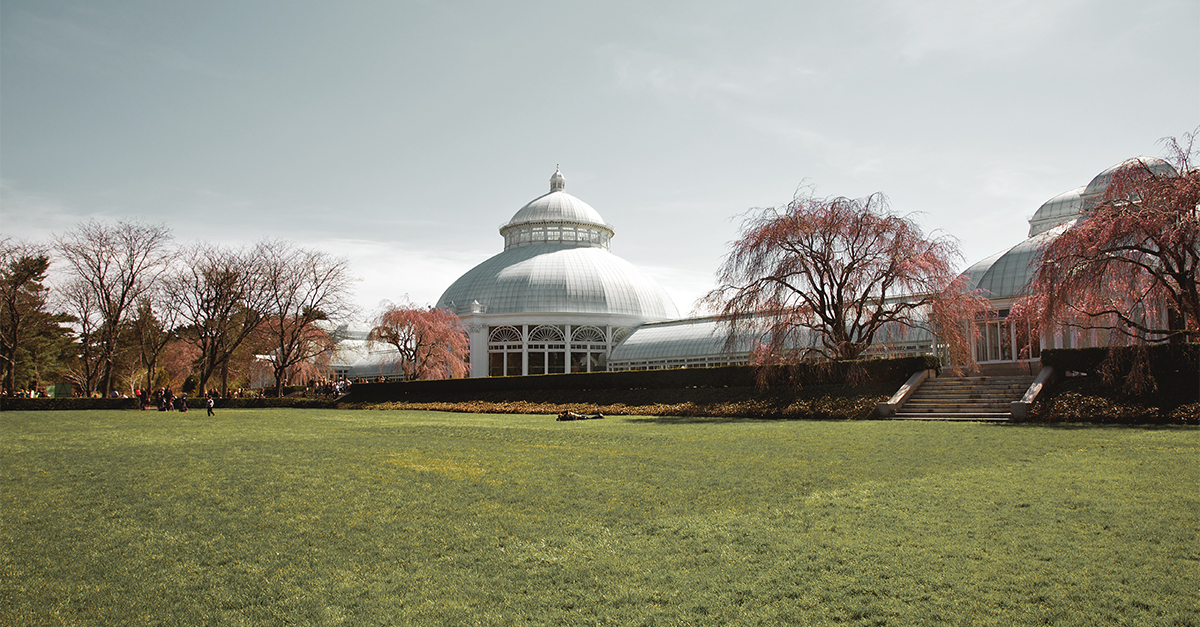
It should come as no surprise that arguably the country’s most iconic city is home to a botanical garden that boasts features unmatched by other gardens, both nationally and internationally. For instance, the LuEsther T. Mertz Library is the largest botanical research library in the United States, and the William and Lynda Steere Herbarium contains the largest collection of plant and fungal specimens in the western hemisphere.
Located in Bronx Park, the New York Botanical Garden earned National Historic Landmark status in 1967, making it one of nearly 120 such landmarks in the city. The garden’s centerpiece, the Enid A. Haupt Conservatory, is a massive, Victorian-style greenhouse built in 1902, which contains tropical, desert, and aquatic plants, and is adorned with its iconic palm dome. Fans of roses will be interested in the Peggy Rockefeller Rose Garden, home to more than 4,000 plants across hundreds of varieties.
Did you know? Now referred to as a concrete jungle, New York City was once completely covered in hemlock forest. In an effort to preserve some of that history, the city’s botanical garden now contains the Thain Family Forest, which at 50 acres makes it the largest surviving remnant of that original coverage.
Atlanta Botanical Garden
Atlanta, GA
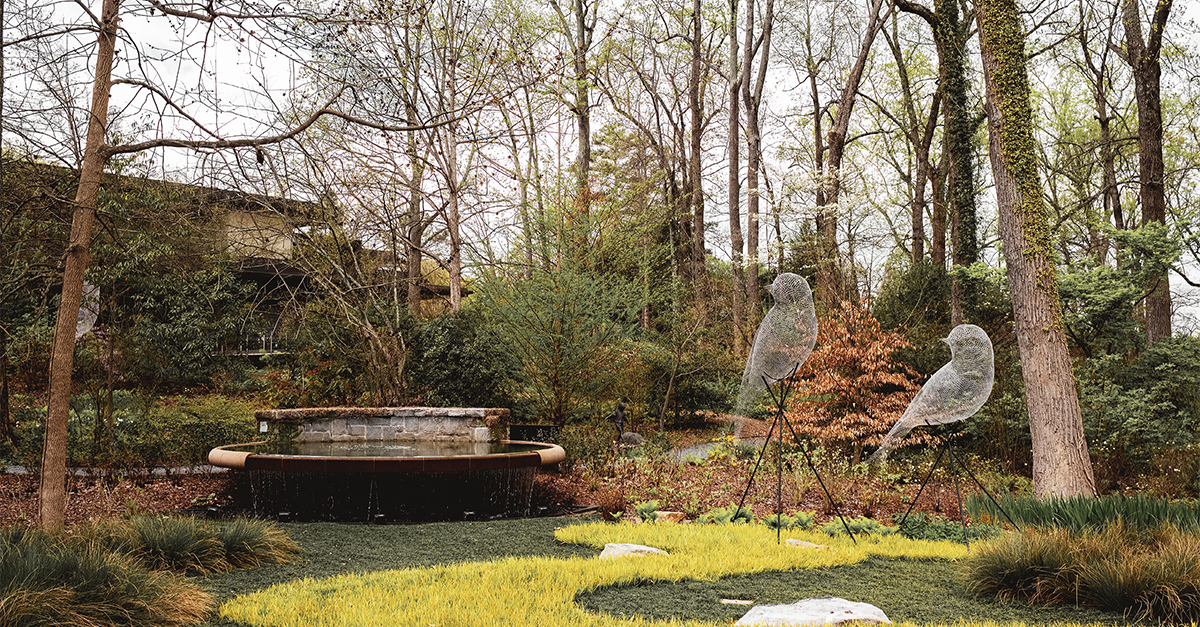
A 600-foot-long bridge suspended 40 feet in the air, taking you through the treetops of Storza Woods. A massive, 25-foot-tall earth goddess sculpture composed of thousands of blooming annuals. The Skyline Garden, a picturesque area providing scenic views of downtown alongside seasonal plant displays. These features, among many more, are what help keep hundreds of thousands of visitors coming back to the Atlanta Botanical Garden year after year.
Within the garden is also the Dorothy Chapman Fuqua Conservatory, an indoor attraction featuring specialized environments for rare, endangered tropical rainforest and desert plants, including a high-elevation orchid house. Not to be outdone is the children’s garden, an award-winning, interactive space designed for hands-on learning, with whimsical fountains and botany exhibits aplenty.
Did you know? Like the Missouri and Desert Botanical Gardens, Atlanta’s greenspace is one of dozens in the country that features the tremendous, twisting blown glass of Dale Chihuly. His exhibition debuted in Atlanta in 2004, making it among the first of its kind, and eventually led to the garden doubling its visitation and membership.